Who provides IT support for a construction company in Dallas?
I do. I am Anthony Omini, owner of Cross River Tech, a small managed IT company in Dallas, and I support construction and contracting businesses on both sides of the work: the office with its estimating, accounting and project management systems, and the field with its tablets, job trailers, huge drawing files and backups. I also run Cat6 cabling in buildings under construction, so one company handles the office and the build, with me as your contact.
Answered by Anthony Omini, Cross River Tech, Dallas
Key takeaways
- A construction company has two networks to worry about, the office and the job site, and most IT providers only think about the first one.
- Drawings, models and site photos are far larger than the files an ordinary office handles, so storage, sync and internet upload speed all need sizing on purpose.
- Project management platforms are the system of record for the whole business, which makes account ownership, permissions and subcontractor access an IT job rather than an afterthought.
- Field devices fail from heat, dust and drops rather than software, so the right choice is rugged hardware with a spare on the shelf, not the cheapest tablet.
- The drawings and the daily photo record are the two things a contractor cannot recreate, so backups need a tested restore, not just a green tick.
Who provides IT support for a construction company in Dallas?
I do. I am Anthony Omini, owner of Cross River Tech, a small managed IT company in Dallas, and the person you deal with directly. I support small and mid-sized businesses across the Dallas metroplex, and construction companies are one of the groups I enjoy most, because the work is genuinely two businesses stapled together. There is an office that looks like any other professional office, running estimating, accounting, payroll and project management. And there is the field, where the same information has to be readable on a tablet, in the sun, with a glove on.
Most IT companies only design for the first half. They set the office up nicely and then treat the job trailer as somebody else's problem. That is where contractors get stuck: the superintendent cannot open the current drawing set, the daily photos never make it back to the office, and the trailer internet is whatever the last project used.
What I take on for a contractor:
- The office: computers, server or cloud storage, email, network, firewall, Wi-Fi, printers and the large-format plotter.
- The field: tablets and phones, how they get on the internet, how drawings and photos move both ways, and how a broken device gets replaced quickly.
- The platforms: accounts, permissions, subcontractor access and license counts for whichever project management, estimating and accounting systems you run.
- The data: backups of drawings, models, contracts, photos and accounting, with a restore that has actually been tested.
- The security basics: multi-factor authentication, endpoint protection, email security and a rule about payment changes, which matters because construction moves large invoices by email.
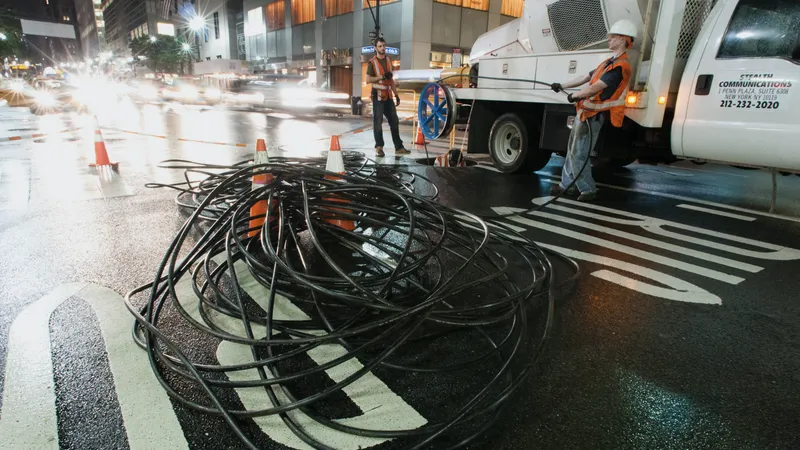
- The cabling: I run Cat6 in commercial buildings under construction and renovation, terminate and test it, and set up the IT room.
Support is remote first, because a remote fix reaches a superintendent in a trailer faster than a drive across the metroplex, with onsite visits by appointment. Tell me what you run and I will tell you what I would fix first.
What does a construction office need that an ordinary office does not?
Four things, mostly: much bigger files, a second location that moves every few months, hardware that survives a job site, and an internet connection sized for uploading rather than downloading. Everything else looks like a normal small business, which is why generic IT support gets a contractor most of the way and then stops.
Here is the comparison I sketch out for contractors who are wondering whether their current provider is missing something.
| Need | Ordinary office | Construction company |
|---|---|---|
| File sizes | Documents and spreadsheets, a few megabytes | Drawing sets, models and photo libraries, hundreds of megabytes to gigabytes |
| Locations | One, permanent | Office plus several job sites that appear and disappear |
| Devices | Laptops on desks | Tablets and phones in heat, dust and rain, plus a plotter and a trailer printer |
| Internet | Download-heavy | Upload-heavy, because photos and drawings go out all day |
| Users | Employees only | Employees, subcontractors, architects, engineers and owners all needing partial access |
| Worst day | Email is down | The current drawing set is unavailable and crews are standing around |
The last row is the one that decides how I design everything else. Down time in an office is annoying. Down time on a job site has a crew cost per hour attached to it, so the design goal is that the field keeps working even when something in the office does not.
How do you handle large drawing files, models and site photos?
By deciding deliberately where each type of file lives, instead of letting every project invent its own arrangement. Drawing sets, revisions, models and the daily photo record are the bulk of a contractor's data and the part that ordinary file sharing handles worst. The symptoms are always the same: a sync client that never finishes, a superintendent opening a PDF that turns out to be two revisions old, and a shared drive that fills up mid-project.
The arrangement that works for most contractors:
- The current drawing set lives in one place, in the project management platform or a single controlled folder, and the field only ever opens that. Old revisions are archived where they cannot be opened by accident.
- Field tablets keep a local copy of the current set, downloaded over Wi-Fi before anyone leaves, so a bad signal at the site does not stop work.
- Models and other large working files stay on office storage, fast and wired, rather than syncing to every laptop.
- Photos upload automatically from phones into a per-project folder or the platform, rather than sitting in camera rolls until someone remembers.
- Closed projects are archived properly, off the active storage but still restorable, because the record has to outlive the job by years.
- Old revisions are named so nobody has to guess, using a naming rule written down once and applied to every project.
Storage sizing is a real conversation, not a guess. A contractor who runs several projects at once and photographs everything will produce more data in a year than most professional offices produce in five. I size the office storage and the cloud plan for that and review it as the business grows. The same problem in another industry, with more detail on the hardware options, is covered in file servers, shared storage and backups for design firms.
How should project management and estimating platforms be set up?
As company-owned systems with deliberate permissions, especially for the people who are not your employees. Construction platforms are unusual in that a large share of the people using them work for someone else: subcontractors, architects, engineers, inspectors and the owner. That makes access control the main event.
I handle the account layer around whichever platforms you run, not the construction workflow inside them. Your project managers know the workflow better than I ever will. What I own:
- Company accounts on the company domain, with a named administrator inside the business and a documented recovery path, so nobody can lock the company out on their own.
- Multi-factor authentication everywhere it is offered, particularly on email and accounting, which are the two accounts fraud targets.
- Permission tiers written down: office staff, field staff, subcontractors and outside parties, each with a defined level, so nobody gets full access because it was quicker.
- Guest and subcontractor access reviewed at project close, so people from a job that finished last year are not still logged in.
- Single sign-on where the platform supports it, so disabling one Microsoft 365 or Google account closes several doors at once.
- License counts checked regularly, because seats accumulate quietly as crews change.
- Integrations documented, especially the link between the project platform and accounting, since that is where a bad sync becomes a financial problem.
The other half of this is device access. A superintendent's tablet that opens the whole platform needs a screen lock, encryption and remote wipe, because tablets get left in trucks. I set that up as part of managed IT services, and the identity side lives on the Microsoft 365 and Google Workspace support page.
What devices actually survive a job site?
Rugged or well-protected ones, chosen for brightness, battery and repairability rather than price, with a spare already on the shelf. Field hardware does not fail the way office hardware fails. It fails from heat in a truck cab, dust in the ports, water, and being dropped onto concrete from waist height. A Dallas summer alone will end a consumer tablet left on a dashboard.
What I recommend for the field:
- Screen brightness first. A display that cannot be read in direct sun is useless no matter how good the specification looks.
- A genuinely rugged case at minimum, and a rugged-class device for anyone working in the weather every day.
- Battery that lasts a full shift, plus a truck charger, because a device that dies at two in the afternoon stops being used at all.
- Cellular built in rather than relying on a phone hotspot, for anyone whose day depends on the drawings.
- Standardise on one or two models so a replacement is a shelf item, not a shopping trip.
- Keep one spare, configured and ready, for every ten or so field devices. The cost of the spare is less than one afternoon of a stalled crew.
- Enroll everything in management so a lost device can be wiped and a replacement can be handed over already set up.
The office side is different: estimators and project managers running takeoff and model software need real workstations with proper processors, memory and graphics, and those are worth specifying carefully. I go through the business hardware side in buying and supporting Dell and Lenovo business computers.
How do you get reliable internet and Wi-Fi at a job trailer?
By treating the trailer as a small branch office with its own connection, rather than hoping someone's phone hotspot holds up. What works depends entirely on the site, so this is a question I answer after looking at the specific location rather than from a catalog.
The options, in the order I usually consider them:
- A wired business connection to the trailer where the site and the schedule allow it. The most dependable option by a distance, and worth asking about early, because ordering circuits is slow.
- A dedicated cellular router with an external antenna. The common answer for most sites. A proper router with a good antenna is far steadier than a phone hotspot, supports several devices, and can be managed remotely.
- Two connections with automatic failover for a long project or a big site, so the trailer stays online when one provider has a bad day.
- Satellite where the site is genuinely out of range of everything else.
Whatever the connection, a few things make the trailer usable rather than merely connected:
- A real access point inside the trailer instead of the router's own weak signal, and a separate network for guests and visiting subcontractors.
- A small uninterruptible power supply, because generator power and temporary service are not gentle on equipment.
- Printing sorted locally, since plans and daily reports still get printed at the trailer.
- Remote management on the router, so I can look at it without driving to the site.
- A kit that gets packed up and reused at the next job rather than bought again.
Signal quality varies a lot by location and by how much steel is between the antenna and the tower, so I am careful not to promise a number before checking. What I will say plainly is that a dedicated router with a proper antenna, mounted outside and high, is usually the difference between a trailer that works and one that does not.
How do you back up drawings, models and project records?
With more than one copy, one of them somewhere ransomware cannot reach, and at least one restore actually tested each year. For a contractor, the drawings and the photo record are the two things that cannot be recreated. Accounting can be rebuilt painfully from statements. A year of daily site photographs documenting what is behind a wall cannot be rebuilt at all, and that record is what protects you when a dispute arrives years later.
What I put in place:
- Office storage backed up to a second device on site and to the cloud, so a failure and a fire are both covered.
- Cloud accounts backed up separately. Microsoft 365 and Google Workspace protect against hardware failure, not against someone deleting a project folder. That is a separate backup.
- One immutable copy that cannot be altered or deleted for a set retention period, which is what defeats ransomware.
- Project archives at closeout, a complete package of drawings, submittals, photos and correspondence, stored where it survives the platform subscription.
- Retention long enough for the obligations you carry, which in construction is measured in years, not months.
- A tested restore, at least annually, where a real file comes back from a real backup while someone watches the clock.
That last point is the one most businesses skip, and it is the only one that proves the rest works. I make it part of the yearly review described in the annual IT check-up every Dallas office should run, and the full backup and recovery setup is on the cybersecurity, backup and disaster recovery page.
Can the same person handle your office IT and the cabling in buildings you construct?
Yes, and that is one of the more useful things about hiring me. I run structured cabling for commercial construction and renovation as well as managed IT, so for a general contractor or a builder I can be both the IT support for your own office and the low-voltage side of a project you are building.
What running cable involves on my side:
- Cat6 pulled from the IT room to every data drop, coordinated around the other trades and the construction schedule.
- Terminations at both ends, labeled at the outlet and the patch panel so the next person can trace anything.
- Testing every run and handing over the results, rather than plugging something in and hoping.
- The IT room itself: rack, patch panel, switch, firewall and access points mounted, powered and configured.
- Access points placed for coverage in the finished space rather than wherever a cable happened to reach.
- Coordination with the internet provider so the circuit arrives before the tenant does.
Running the cable in an active construction site is different from running it in a finished office: it happens above open ceilings, around the schedule, before the walls close. Getting the drops right at that stage costs a fraction of adding them afterwards, which is why the conversation is worth having early rather than in the final week.
The details, including the choice between copper grades and fiber, are in Cat6 vs Cat6a vs fiber for an office build-out, and the service itself is on the data cabling and IT room setup page. If you are handing a finished suite to a tenant who also needs computers and internet, I can do that part too.
What does IT support cost for a contractor, and how do you start?
Either a fixed monthly fee per user or per device, or hourly with no contract, and which one fits depends on how much field technology you run. A contractor with an eight-person office and forty field devices is a different quote from an eight-person office with eight laptops, so I price after a conversation rather than from a table.
| Managed IT plan | Hourly, no contract | |
|---|---|---|
| Billing | Per user or per device per month, month to month, cancel anytime | By the hour, one-hour minimum |
| Price | Quoted after a short conversation | $100 remote and $150 onsite in business hours; $150 remote and $225 onsite after hours, weekends and holidays |
| Includes | Updates for computers and servers, unlimited remote support, onsite at no extra charge when remote cannot fix it, antivirus and email security, managed backup, and management of internet, firewall, switches, access points and printers | Whatever you called about |
| Cabling | Quoted per project | Quoted per project |
| Best for | A company with field devices, several projects and data it cannot lose | A small office that needs occasional help or a single project done |
For context, small-business managed IT in the Dallas market is commonly quoted somewhere around $100 to $175 per user per month depending on what is included. That is a typical market range rather than my price. Hourly versus monthly IT support compares the two honestly, including the point at which hourly stops being cheaper.
To start, tell me how many people work in the office, how many devices are in the field, which platforms you pay for, where your files live and what broke most recently. I cover Dallas and the wider metroplex onsite and support businesses remotely anywhere in Texas. Send me those details and you will get a plan in plain language and an honest quote, usually the same day.
Questions people ask
Who handles IT for contractors and builders in Dallas?
Cross River Tech does. I am Anthony Omini, owner of a small managed IT company in Dallas and the person you deal with, and I support both halves of a construction business: the office with its estimating, accounting and project management systems, and the field with tablets, job trailer connectivity, drawing files and backups. I also run Cat6 cabling in commercial buildings under construction, so one company covers the office and the build.
How do you get internet to a job trailer?
Usually a dedicated cellular router with an external antenna mounted high on the trailer, which is far steadier than a phone hotspot and supports the whole trailer. Where the site and schedule allow it, a wired business circuit is better still and worth ordering early. Long projects often justify two connections with automatic failover so a single provider outage does not stop the site.
Where should current drawing sets live so the field always has the right revision?
In one controlled location, either the project management platform or a single folder that superintendents open directly, with older revisions archived where they cannot be opened by accident. Field tablets keep a local copy downloaded over Wi-Fi before leaving, so a weak signal does not stop work. Wrong-revision problems are almost always a file organization issue rather than a technical one.
What tablets work best on a construction site?
Ones chosen for screen brightness in direct sun, all-day battery, built-in cellular and genuine ruggedness, standardized down to one or two models so replacements are a shelf item. Heat, dust and drops end far more field devices than software problems do. Keeping one configured spare per ten devices costs less than a single afternoon of a crew waiting on drawings.
Do you also do the low-voltage cabling for a building under construction?
Yes. I run Cat6 from the IT room to each drop, terminate and label both ends, test every run and hand over the results, then set up the IT room with the rack, patch panel, switch, firewall and access points. Doing it while ceilings are still open costs a fraction of adding drops after the walls close, so it is worth planning early.
How should a construction company back up its project data?
Office storage backed up to a second device on site and to the cloud, cloud accounts backed up separately, and one copy that cannot be altered or deleted for a set period so ransomware cannot reach it. Retention needs to match the years of obligation a contractor carries. Most importantly, test a real restore at least once a year rather than trusting a green tick.